
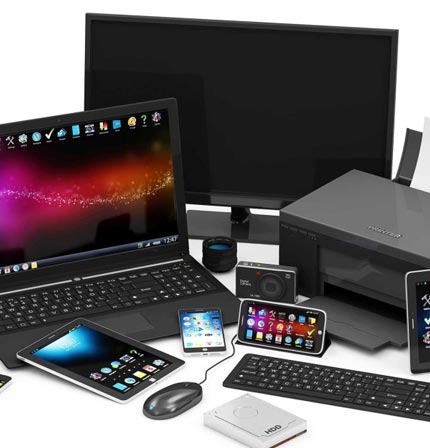
When it comes to preparing for a compliant WEEE collection, it begins before you’ve even booked your collection. Auditing and categorising your electronics and tech items, safely storing them ahead of collection and removal of sensitive data will all help to ensure that you are adhering to the rules set out in the UK.
In this article, we will take you through the key steps to ensure that your Waste Electrical and Electronic Equipment (WEEE) is recycled or disposed of in a manner that complies with policies and regulations to keep your company data safe from compromise and without harm to the planet.
Conduct an audit of your company’s electrical items
Before you book your WEEE collection, it’s advisable to create an inventory of all of the existing electronics at your place of work, from IT equipment to kitchen electricals.
Try to categorise them too, including identifying any potentially hazardous items, like batteries or fluorescent lighting. This will help you when it comes to sourcing the right recycling or disposal routes for safety and sustainability.
Then, audit these items – is there anything that is broken or no longer fit for purpose? Are there any items that could be fixed or repurposed? Separate items that could be reused from those that need to be recycled or otherwise destroyed. This can help you identify just how much WEEE you have that needs to be disposed of. Once you have a clear view of the volume of WEEE you need collecting, you can book your compliant WEEE collection.
Store your WEEE safely ahead of collection
Once you have identified the items that need to be disposed of, it’s important to store them somewhere safe and secure.
Firstly, this eliminates the chance of data leaks ahead of secure data disposal. Secondly, it reduces the risk of dangerous materials, such as battery fluid, getting in contact with people or other equipment. Batteries can also pose a fire risk, making it even more important to store them safely. For the safest way to store batteries, ensure to remove batteries and keep them separate from the rest of your mixed WEEE recycling.
Deal with compliant destruction of data
If you are recycling or disposing of data-bearing devices, like laptops, phones or hard drives, you’ll need to take steps to ensure you safely and securely remove any data stored on the WEEE items, especially Personally Identifiable Information (PII) of your employees and customers, and business information, like financial details.
For physical data such as files or records, you can shred information to destroy it. However, for digital data, this can be achieved by restoring devices to factory settings, or using wiping software.
For additional peace of mind that you have dealt with data in a way that complies with current GDPR regulations, you can add a data destruction service with your WEEE collection and IT recycling. We know how important data destruction is, and we provide full legal certification to evidence the complete destruction of data.
Final thoughts
Overall, in order to ensure that your WEEE collection and disposal is compliant is to work with trusted partners who are knowledgeable of the current regulations and policies, are aware of the most environmentally-friendly and data-secure methods of recycling and disposal, and will provide legal certification confirming their compliance.
At Priority WEEE, we work with you to find the best solution for IT recycling and mixed WEEE recycling to give you the assurance that you are managing your WEEE in a compliant manner. Get in touch to find out how we can help you today.