
Every warehouse has an aisle it does not talk about. The faulty returns that cannot be resold. The recalled batch waiting for someone to decide. The pallet of last season’s stock that finance has written down to zero. Sometimes, after the lawyers have been busy, a cage of counterfeit goods seized from a market stall with your client’s logo stitched on badly.
The instinct with all of it is the same: it is worthless, so throw it away. And the instinct is wrong on both counts. It is not worthless, its materials are real, and its brand risk is very real, and throwing it away is precisely how unsellable stock finds its way back to a marketplace listing, a car boot, or a courtroom.
This is what product destruction services exist for: the controlled, certificated, recycled ending. Here is when stock crosses the line from disposal to destruction, and how the process protects the businesses that use it.
The Leak Problem: Why Bins Resell Things
Understand one uncomfortable fact about discarded goods and the rest of this subject follows: skips leak. Goods that look sellable get pulled from waste streams by hands all along the chain, and they resurface where brands least want them.
Now run the aisle through that lens.
Faulty returns resurface as gray-market “bargains” that fail in customers’ homes, with your name on the fascia and, for electricals, real safety stakes attached. The fire-risk recall that re-enters circulation through a skip is the textbook nightmare, and trading standards files contain exactly such textbooks.
Recalled products carry legal duties: a recall is a public promise that the batch is leaving the market, and regulators, insurers, and retail partners expect evidence it did. “We binned them” is not evidence; it is an admission that the batch is now unaccounted for.
Excess and outdated stock leaks into channels that undercut your own retailers and wreck pricing agreements, which is why licensors and brand owners increasingly write certificated destruction into their contracts.
Counterfeits are the sharpest case: after seizure, brand owners and enforcement bodies require documented destruction so the fakes can never circulate again. A counterfeit that escapes the skip has made fools of everyone in the enforcement chain.
The common thread: for this class of goods, the deliverable is not removal. It is irreversibility, evidenced.
What Certificated Destruction Actually Involves
A proper destruction service is a chain of custody with a crusher at the end, and every link matters.
Secure handling from your door. Tracked vehicles, sealed or supervised loads, and no intermediate stops where sellable-looking stock might wander. The same discipline our data destruction service applies to drives applies here to goods.
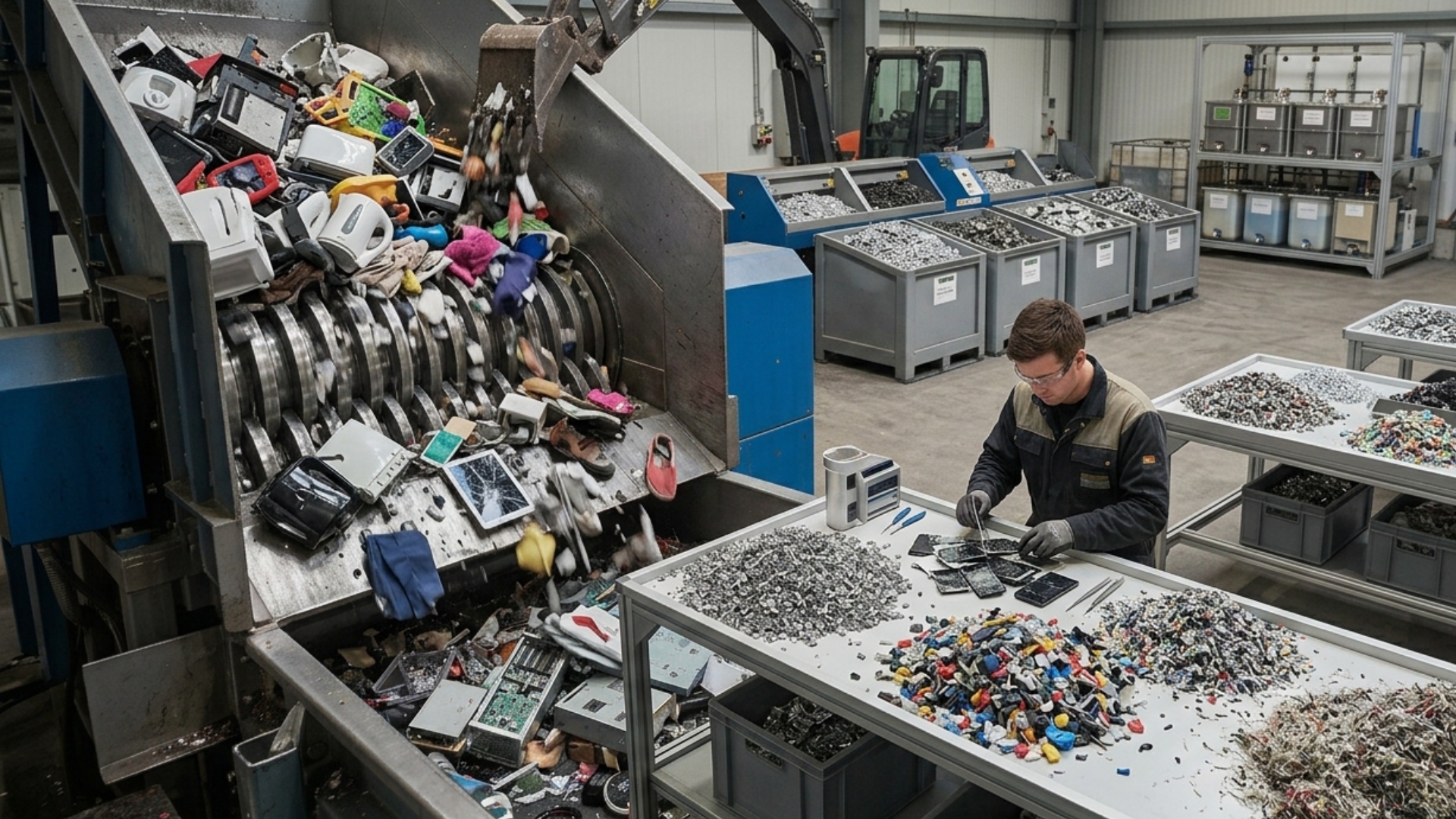
Destruction appropriate to the product. Shredding, crushing, dismantling: whatever renders the items permanently unusable and unrecoverable as products. Tailored, because destroying perfume differs from destroying power tools differs from destroying counterfeit trainers, and our specialist services are built product by product.
Certification as the deliverable. The certificate of destruction records what was destroyed, in what quantities, when, and how, reconciled against your inventory or returns records where required. That single document is what closes the insurance claim, satisfies the recall file, answers the licensor’s audit, and lets finance write the stock off with a clear conscience.
Recycling after destruction. Removing saleability does not remove material value. Destroyed electricals flow into the same recovery chains our materials guide describes, metals, plastics, boards to smelting, batteries out first as our battery guide insists, so the environmental report and the brand protection report come from the same process. Destruction and zero-to-landfill are collaborators, not rivals.
The Returns Stream: Destruction As Routine, Not Crisis
The recall is the dramatic case, but the steady customer for destruction is quieter: the returns bench.
Retailers, distributors, and manufacturers accumulate faulty and warranty returns continuously, and electrical returns especially cannot simply re-shelve: fault status is unverifiable at the till, safety liability persists, and warranty terms with suppliers often require the failed units to be destroyed and evidenced rather than resold. Warranty return management is its own discipline: audited intake, quantities reconciled, batteries and any data-bearing components handled through their proper lanes, destruction certificated, materials recycled, and reporting your supplier agreements can lean on.
Run as a standing arrangement, scheduled collections, supplied containment, one paperwork chain, the returns aisle stops accumulating and starts flowing, and the quarterly stock write-off arrives pre-evidenced. Businesses that bolt this onto their existing WEEE and asset management arrangements, one provider, one file, find the marginal effort close to nil: the collections are already coming, mainland UK, Glasgow to Edinburgh, typically within 5 to 7 working days, next-day when a recall clock is ticking.
Getting The Decision Right: Destroy, Resell, Or Recycle?
Not everything in the unsellable aisle needs the crusher, and an honest provider sorts rather than upsells. The decision tree we walk with customers:
- Is there a legal or contractual duty to destroy? Recalls, counterfeits, licensor terms, warranty agreements: if yes, destruction with certification, no debate.
- Does resale create risk under your brand? Faulty, safety-adjacent, or unverifiable stock: destroy. The margin on a grey resale never survives one incident.
- Is it merely surplus and sound? Then it is not a destruction case at all: asset recovery and resale channels, as our IT asset management guide covers for electricals, return real value instead.
- Is it simply end-of-life? Ordinary WEEE recycling, documented, no certificate theatre required.
Ten minutes of sorting against that tree routinely converts a feared cost into a mixed outcome: some stock earns, some recycles, and the genuinely dangerous sliver gets the certificated ending it always needed.
Frequently Asked Questions About Product Destruction
What is a product destruction service?
Controlled, evidenced destruction of unsellable goods, returns, recalls, excess, outdated items, counterfeits, followed by material recycling, with certificates as the deliverable.
Why not just bin unsellable stock?
Because skips leak, and leaked stock resurfaces under your brand with liability attached. Certificated destruction closes the path and proves it closed.
What happens to seized counterfeits?
Documented destruction, as brand owners and enforcement require, with certification and recycling of the residual materials.
Is destruction environmentally wasteful?
No: destruction removes saleability, then recycling recovers the materials. Brand protection and recovery run in one process.
How are electrical returns handled?
As a managed stream: audited, batteries and data components extracted, destruction certificated, materials recycled, reporting reconciled to your records.
How quickly can destruction happen?
Confirmed dates within 5 to 7 working days as standard, next-day for urgent recalls, on tracked vehicles, mainland UK from our Bedford base.
Close The Aisle Properly
The unsellable aisle only ever grows, and every week it stands there it holds cost, risk, and one unlocked exit back to the market. A certificated destruction run replaces the whole aisle with a folder: destroyed, evidenced, recycled, done.
Priority WEEE destroys faulty returns, recalled batches, excess stock, and counterfeit goods with tailored processes, certificates as standard, and full material recovery after, alongside the WEEE, data, and asset services the rest of your estate already needs. Call 0800 078 9580 or request a free review at priorityweee.co.uk, and give the aisle nobody talks about an ending everyone can sign off.
