
A hotel closes forty bedrooms for a refit. The strip-out crew starts on a Monday.
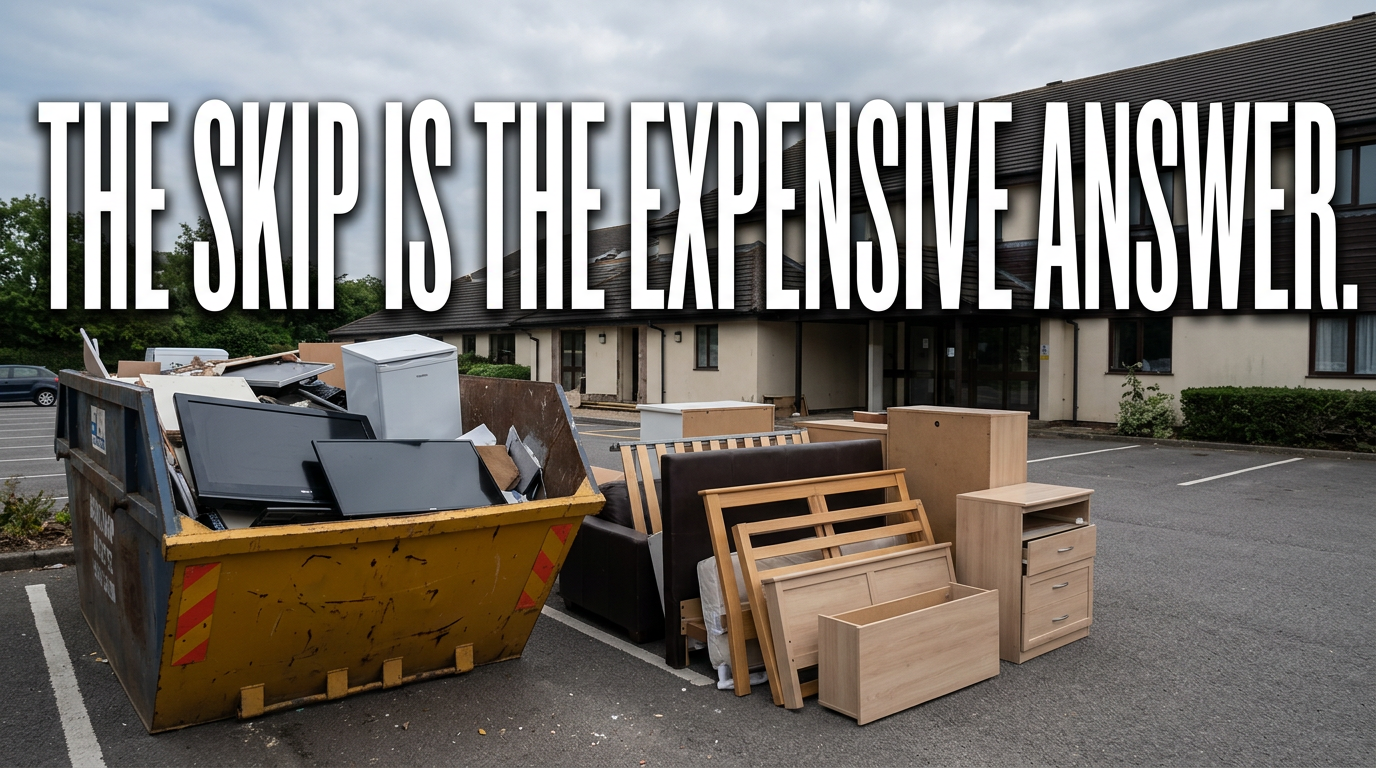
By Wednesday, there is a skip in the car park with forty televisions in it. A stack of minibar fridges sits beside it, and kettles go in by the armful.
Every one of those items counts as waste electrical equipment. The fridges stay hazardous until somebody degasses them.
And the skip is the most expensive answer available.
Hospitality strips out more electricals than people expect
A bedroom looks simple. Across forty of them, the list gets long.
- Televisions, remote controls and wall mounts
- Minibar fridges and in-room safes
- Kettles, hairdryers and irons
- Bedside lamps, desk lamps and light fittings
- Telephones, clock radios and docking stations
- Air conditioning units and fan heaters
- Door entry readers and electronic locks
Then the back of house, which is where the value and the hazard both sit.
- Commercial fridges, freezers and cellar cooling
- Ice machines, glass washers and dishwashers
- Combi ovens, fryers, grills and induction hobs
- Coffee machines and vending units
- EPOS terminals, card machines and kitchen display screens
- CCTV recorders, servers and networking kit
Cooling equipment is the part that cannot go in a skip
This is the single biggest compliance failure on a hospitality refit.
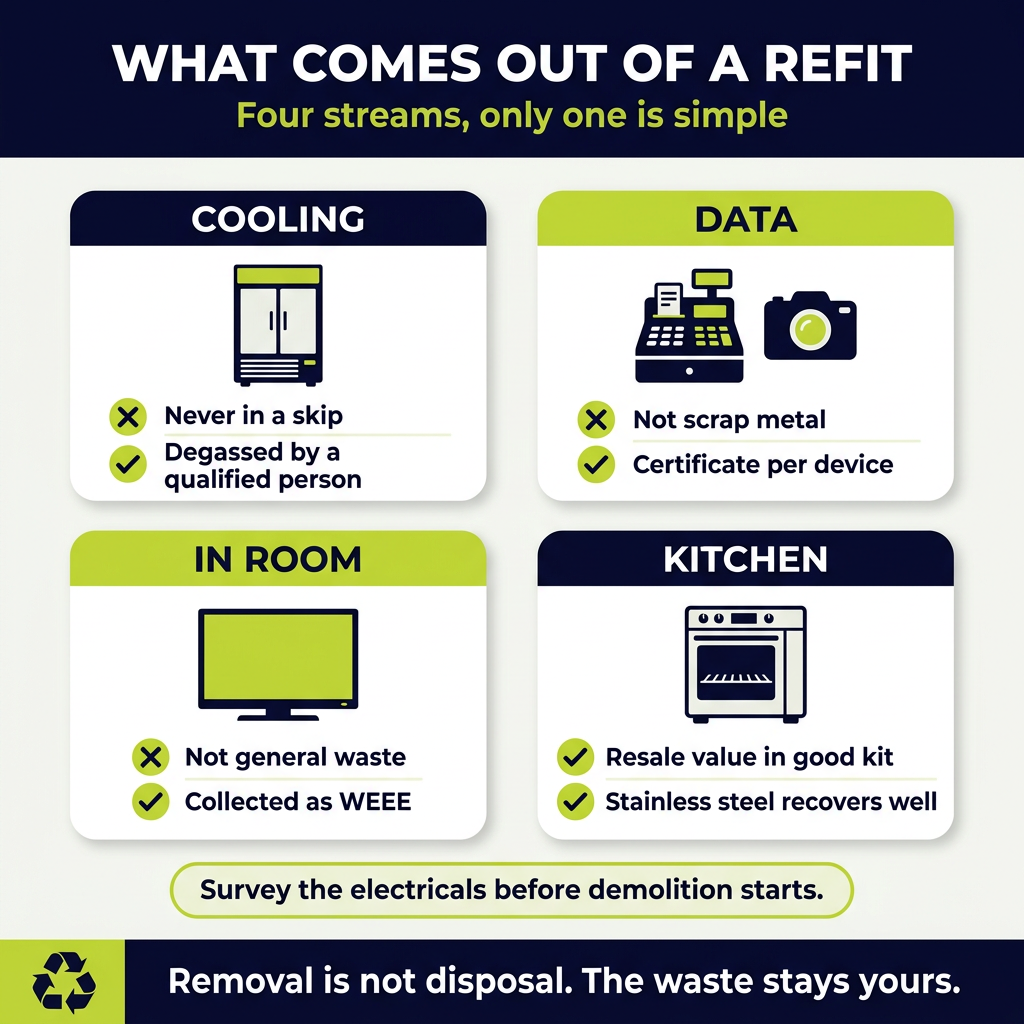
Fridges and freezers contain refrigerant gas. Older units contain ozone-depleting substances; newer ones contain fluorinated gases.
Both need controlled removal. A qualified person degasses the unit before anything else happens to it.
The insulation foam holds gas too. Which is why draining a fridge and scrapping it does not work.
It covers every cooling item. Minibars, cellar coolers, ice machines, display chillers and air conditioning.
Skipping it is an offence, not an oversight. Releasing refrigerant breaches the regulations, with real consequences.
Our fridge decontamination and fridge recycling services cover this. We went through the details in our guide to the most regulated appliance in the building.
The data nobody thinks about in a pub
Hospitality sites hold more data than their operators realise, and it leaves during a refit.
EPOS terminals hold transaction history. Including card data on older or badly configured systems.
CCTV recorders hold footage. That is personal data, and the recorder is a hard drive.
Guest wifi controllers hold device and session logs. Many configurations link those to individuals.
Booking and PMS terminals hold guest records. Names, addresses, card details, and stay history.
Door entry systems hold access logs. Which rooms, which cards, which times.
All of it needs data destruction with a certificate, rather than a trip to the skip with the kettles.
Most of these sit in a back office nobody surveys. Walk that room before the crew starts.
Why the strip-out crew is not the answer
The contractor doing the refit seldom carries the kit for this, and that is no criticism of them.
Their job is speed. A strip-out sells by the day, and sorting slows it down.
One skip is simpler than five streams. So everything goes in the one skip.
Removal is not disposal. The waste stays yours, whoever carried it out of the building.
They hold no refrigerant licence. Degassing needs a qualified person and specific handling.
Your duty of care does not transfer. It follows the waste, not the invoice.
Brief the contractor before they start. Put the electrical streams in the programme as their own line.
Planning it into the refit
Planning stage solves the whole problem, for almost no cost.
It takes an hour with the programme open and somebody who knows the building.
Survey the electricals before demolition. Count the fridges, the screens and the data-bearing items.
Book cooling equipment separately. It needs its own handling and its own date.
Set aside a marked area for WEEE. Not the skip, and not the corridor.
Identify data-bearing devices in advance. Flag EPOS, CCTV, PMS and door entry on the survey.
Agree who lifts what. Contractor to the marked area, carrier from there.
Get the collection dates into the programme. Alongside the trades, not after them.
A hotel refit runs to a tight programme. Waste that is not in the programme becomes a skip.
What is worth something
Not all of it is a cost, and hospitality kit holds more residual value than office equipment.
Commercial catering equipment has a resale market. Combi ovens and good fridges above all.
Stainless steel carries real scrap value. Kept apart, not mixed into a skip.
Recent televisions and EPOS terminals often move on. Across a group, or out to a buyer.
Copper in cabling and motors recovers well. Above all, from cellar cooling and air conditioning.
Mixed into general waste, all of it is worth nothing. That is the true cost of the single skip.
Our guide to what comes out of recycled electronics covers the materials side.
Groups and estates
An operator refurbishing several sites a year meets the same problem each time, which makes it worth solving once.
Set one specification. What gets surveyed, what gets separated, and who collects.
Write it into the contractor pack. So every strip-out crew works the same way.
Hold the evidence in one place. Transfer notes, consignment notes and destruction certificates together.
Track the recovered value. Across sites, so the case for doing it properly is visible.
A group doing four refits a year moves a serious quantity of kit. Handling it the same way each time is worth real money.
It also makes the next refit quicker to plan, because the survey template already exists.
Frequently asked questions
Can hotel and pub electricals go in the refurbishment skip?
No. Electrical equipment is WEEE and needs separate collection by a licensed carrier, whatever else is happening on site.
Cooling equipment is a further step again, because it contains refrigerant gas.
Why can commercial fridges not be scrapped normally?
They contain refrigerant gas in the circuit and often in the insulation foam. A qualified person has to remove that gas under controlled conditions.
It applies to minibars, cellar coolers, ice machines and air conditioning as well as kitchen units.
Does the strip-out contractor handle the waste?
They remove it. Removal is not disposal, and your duty of care follows the waste rather than the invoice.
Brief them before they start and put the electrical streams into the programme as their own line.
What in a pub or hotel holds data?
EPOS terminals, CCTV recorders, guest wifi controllers, booking and property management terminals, and door entry systems.
All of those need data destruction with a certificate rather than a skip.
Is old catering equipment worth anything?
Often yes. Combi ovens, good commercial fridges and recent screens have a resale market, and stainless steel carries scrap value.
None of that survives a general skip.
When should we book the collection?
At planning stage, with dates in the refit programme alongside the trades. Cooling equipment needs its own date.
Waste that is not in the programme ends up in whatever container is nearest.
We refurbish several sites a year. What should we standardise?
The survey, the separation, the carrier and where you keep the evidence. Write it into the contractor pack so every crew works the same way.
Tracking recovered value across sites makes the case for doing it right.
The bottom line
A hospitality refit moves more electrical equipment in a fortnight than most offices own outright.
Survey it before demolition starts, and give the electricals a marked area that is not the skip.
Book cooling equipment on its own date, because degassing is a regulated job with a qualified person attached.
Then pull out the EPOS, CCTV and booking terminals. A pub holds guest data whether or not anyone has thought about it.
Priority WEEE collects electrical equipment from hotel, pub and restaurant refurbishments across the UK. That includes degassing for all cooling equipment and certified data destruction. Book a free waste review, and we will survey before the crew arrives.
